


Couchsurfing: Stay, Meet, Host
2.93.36K Reviews
App Specs
- Version
- 7.2.11
- Updated On
- License
- Free
- Downloads
- 5,000,000+
- Developer
- Couchsurfing Inc.
- Categories
- Travel & Local
- Platform
- Android, iOS
Screenshots






 Analysis by AppCompare
I think the best way to understand Couchsurfing is to start with a particular kind of trip: you want to see a place, but you’re also curious about the people who live there. Maybe you’re traveling alone, arriving without a built-in social circle, or hoping to trade a standard night in a room for a conversation over breakfast. That is the promise I find most appealing here. It is a travel app from Couchsurfing Inc., but the real draw is the possibility of making a personal connection, not simply arranging a bed.
That difference matters when you decide whether to use it. I wouldn’t treat Couchsurfing as a guaranteed accommodation plan or a substitute for booking a room with fixed check-in details. I’d treat it as a way to meet hosts and fellow travelers, with a stay as one possible outcome. If your dates are fixed, your schedule is tight, or privacy is essential, keeping a conventional booking as a backup makes the whole trip less stressful.
A New Way to Travel
When I first downloaded the Couchsurfing Travel App, I was a bit skeptical. I mean, staying at a stranger's house? But the app does a great job of easing you into the idea. The community vibe is strong, and safety is clearly a priority.
The app sits in the travel-and-local space, though it behaves differently from the usual hotel and lodging apps. Those services are built around comparing rooms, prices, and booking terms; Couchsurfing is centered on people and shared experiences. It is free to download, with in-app purchases listed from $2.99 to $29.99 per item. That makes trying the app itself easy, but it doesn’t make a host’s availability or a successful match something you can count on.
Setting Up Your Profile
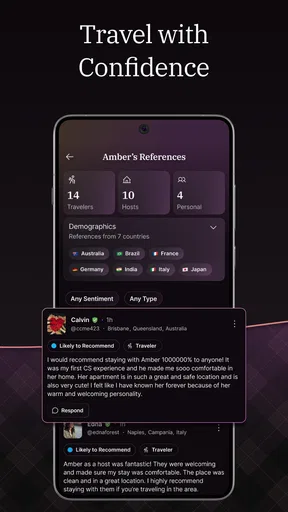
The first thing you'll do is set up your profile, which is crucial. Your profile is your calling card, and you’ll want it to reflect your personality and travel goals. I spent some time adding photos and writing a bio that showed I'm a fun and respectful guest. Plus, the app encourages references, which helps build trust.
I’d make the profile useful rather than polished for its own sake. Say what kind of trip you’re planning, what you enjoy talking about, and how you tend to share space. A host is trying to picture the person who might arrive at their door, so practical details and a warm, specific introduction are more helpful than a string of broad claims about loving travel. References can help round out that picture, but they are one part of judging a match, not a substitute for a direct conversation.
For a first attempt, I’d also keep the plan simple: one destination, a realistic date range, and enough flexibility to consider more than one possible host. That makes it easier to send thoughtful messages instead of rushing through requests after you have already committed to a schedule. If the trip depends on a particular arrival time or a very short overnight window, a regular booking is usually the more dependable choice.
Worth Reading Before You Choose

EA SPORTS FC Mobile 26 Is a Bigger Football Game, but It Takes Time

Flipboard Shows What News Apps Must Do Beyond the Feed

Switching to Android Auto Means Rethinking Your Driving Routine

Google Calendar Makes a Crowded Week Easier to Manage

Ludo King Makes the Most of the Minutes Between Plans

Baby Panda World Brings Quick Play to Modern Phones, but Its Game Library Feels Busy
Finding a Host
Searching for a host is super intuitive. You can filter by location, availability, and even interests. I found a lovely host in Barcelona who shared my passion for historical architecture. The hosts usually have detailed profiles, complete with photos and reviews, so you know what to expect.
Once I found a host, I sent a personalized request explaining why I’d like to stay with them. It's like sending a friendly email, and it helps if you mention specific things from their profile that caught your eye.
A small but useful shift is to read a host’s profile as a guide to expectations, not just as a travel recommendation. Pay attention to the way they describe their home, routine, and interests, then ask about anything that could affect your stay. I’d clarify arrival timing, how much time the host expects to spend together, and whether the arrangement fits the length of my visit. Those questions can prevent a friendly match from becoming awkward because each person imagined something different.
For example, imagine arriving in a city on a Friday afternoon with a free evening and no urgent appointment the next morning. You could browse potential hosts whose profiles genuinely interest you, write a request that refers to a shared interest, and leave room for a conversation before making plans. If nobody replies in time, you still have the option to choose a conventional place to stay rather than waiting until the last minute. That is a more sensible workflow than assuming a request will turn into a confirmed plan.
The Hosting Experience
Staying with someone through Couchsurfing is more than just free accommodation; it’s about cultural exchange. My host in Barcelona took me on a local tour, showing me hidden gems that weren’t in any guidebook. We shared meals, stories, and laughs. It felt like staying with an old friend.
Hosts often have unique insights into their city, and they love sharing them. Whether it's a quaint café or an off-the-beaten-path trail, you’re bound to experience something special.
I’d still keep my own itinerary. A host’s suggestions are most valuable when they add context to places you already want to explore, rather than making your whole day depend on someone else’s availability. If a local recommends a neighborhood walk or a small café, you can follow up with questions and decide what suits your pace. That gives you the benefit of local perspective without expecting a host to act as a full-time guide.
There is also a social trade-off worth being honest about: staying in someone’s home means sharing space and adapting to another person’s routine. A guest who expects hotel-like privacy, a quiet room on demand, or complete control over meals and timing may find that uncomfortable. I’d choose Couchsurfing when the human exchange is part of the point, not when I simply need a predictable place to sleep.
Safety and Trust
Safety is a big concern when using apps like this, and Couchsurfing addresses it with multiple layers. Besides the references and verification processes, there's a strong emphasis on communication. Always chat with your potential host beforehand to establish comfort and trust.
During my stay, I felt completely at ease. My host was verified, and the numerous positive reviews assured me I was in good hands.
I see profiles, references, and verification as useful signals, not guarantees. Before agreeing to stay, I’d read the details carefully, check that the communication feels clear and respectful, and make sure I understand the practical arrangement. If answers are evasive or I feel pressured to ignore my own boundaries, I would step away and arrange somewhere else. Trust is built through several small checks; it shouldn’t depend on a single badge or a reassuring first impression.
That same care applies to the handoff from planning to arrival. Confirm the agreed timing and address through the conversation, keep your travel plans accessible, and tell someone you trust where you expect to be. These are sensible habits for meeting anyone through a social travel app. They don’t eliminate risk, but they help you stay in control of your choices instead of treating a profile as a promise.
Additional Features
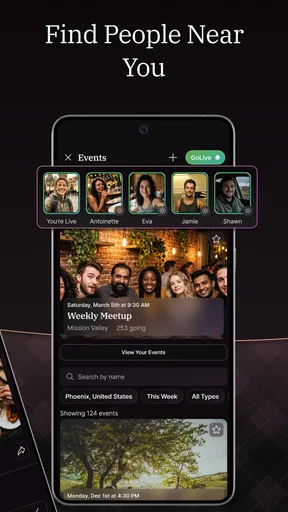
Aside from finding a place to stay, Couchsurfing offers events and meetups. I attended a Couchsurfing meetup in the city, which was a fantastic way to connect with other travelers and locals. These events are often casual and fun, ranging from coffee meetups to full-blown parties.
The app also has a "Hangouts" feature, perfect for spontaneous meetups. If you find yourself in a new city and want to grab a drink or explore, this feature connects you with others nearby looking for the same.
These social options change the app’s usefulness when staying with a host is not the right fit. You can still seek a local conversation or meet other travelers without making your accommodation depend on someone you have just met. For someone with a booked room who wants company for a walk or a casual evening, that can be a more comfortable middle ground. I’d use the same judgment as with a host request: agree on a public, convenient meeting point and don’t feel obliged to continue if the interaction does not feel right.
Compared with travel forums or general social apps, Couchsurfing is more directly tied to meeting people around travel, while a hotel app is much better at giving you a definite place to sleep. Neither approach replaces the other. I would use Couchsurfing to explore social possibilities and local connections, and use a traditional lodging service when certainty, privacy, or a tightly managed schedule matters more than meeting someone new.
Who It Suits—and When I’d Choose Something Else
I think the strongest fit is an open-minded traveler who enjoys conversation, can communicate plans clearly, and is comfortable adapting to someone else’s home or schedule. It can also suit someone who already has accommodation but wants to meet locals or other travelers through events and Hangouts. The app has a Teen content rating, so younger users and families should consider that context and make choices appropriate to their situation.
I’d skip hosting requests if I needed guaranteed lodging, had no flexibility around arrival, or would be uncomfortable sharing personal space. It is also a poor match if I wanted a service where the main job is to compare rooms and lock in a reservation. In those cases, a hotel or other conventional accommodation app is the practical tool; Couchsurfing may still be useful for social plans, but it should not carry the burden of a booking system.
The scale of the community is substantial: Couchsurfing has more than five million installs, alongside an average rating of 3.2 from around 117,000 ratings and roughly 3,200 written reviews. I read that as a sign that the idea attracts many travelers but does not work equally well for everyone. The rating is a good reason to approach it with realistic expectations rather than assume that every search, conversation, or stay will feel effortless.
Final Thoughts
Overall, the Couchsurfing Travel App transformed the way I travel. It’s more than just budget-friendly; it’s about building connections and experiencing destinations through the eyes of locals. Of course, it's not for everyone. If you prefer privacy, traditional accommodations might be more your speed. But if you're open to new experiences and meeting incredible people, give it a shot.
Remember, the key to a great Couchsurfing experience is mutual respect and open-mindedness. Keep your communication clear, be flexible, and you’ll likely have memories to cherish for a lifetime.
So, next time the travel bug bites, why not try Couchsurfing? You might just find a home away from home.
Making the First Trip More Manageable
If I were trying it for the first time, I’d avoid building a whole trip around one unanswered request. I’d prepare a short, genuine profile, look for a host whose interests and expectations fit mine, and send a message that shows I actually read their page. Then I’d wait for a real conversation before treating the stay as part of my itinerary. That approach takes more patience than tapping through room listings, but it gives both people a fair chance to decide whether the arrangement makes sense.
It also helps to decide in advance what would make me comfortable: how much notice I need about timing, what kind of shared space I’m fine with, and which questions I need answered before arrival. Those boundaries are not unfriendly; they make the exchange clearer. If the match works, the conversation can become the start of a memorable local experience. If it doesn’t, moving on is a perfectly reasonable outcome rather than a failure of the app.
The current version is 6.0.1, and the app has been available since June 25, 2012. I’d think of that longevity as context for a longstanding travel community, not as a promise that every city or date will offer the same experience. The best result still depends on the people involved, how carefully you communicate, and whether your plans leave room for a genuine exchange.
For me, Couchsurfing is worth considering when connection is part of the destination. I would use it with curiosity, clear expectations, and a backup plan—not as a shortcut to guaranteed accommodation. If that balance sounds right for the way you travel, it can open the door to conversations and experiences a standard room search is not designed to provide.
Pros
- Connects travelers with locals easily.
- Offers unique
- authentic travel experiences.
- Free accommodation options available.
- User-friendly interface and design.
- Wide global community of users.
Cons
- Safety concerns with staying with strangers.
- Limited availability in remote areas.
- In-app messaging can be unreliable.
- Verification process is not mandatory.
- Ad-supported free version can be distracting.
FAQs for Couchsurfing: Stay, Meet, Host
What is the Couchsurfing Travel App and how does it work?
The Couchsurfing Travel App connects travelers with local hosts who offer free accommodation. Users create profiles, search for hosts in their desired destination, and send requests to stay. It's a great way to meet locals, share experiences, and explore places authentically. The app also offers events and meetups for travelers and locals.
Is the Couchsurfing app safe to use for travelers and hosts?
Couchsurfing emphasizes safety with features like profile verifications, user reviews, and references. Users are encouraged to check profiles and reviews before accepting or hosting guests. While the platform provides tools for safety, travelers and hosts should always follow personal safety practices and trust their instincts during interactions.
Are there any costs associated with using the Couchsurfing app?
The app itself is free to download and use, allowing users to connect with hosts and attend events without charges. However, there is an optional verification process that requires a fee, which adds a layer of trust to profiles. Additionally, users might incur costs during their travels, such as transportation or dining.
What features does the Couchsurfing app offer besides accommodation?
Beyond accommodation, the Couchsurfing app offers a range of features to enhance travel experiences. Users can join local events, participate in discussions, and connect with other travelers through the app’s community features. It's a platform that facilitates cultural exchange, making it more than just a place to find a free stay.
How can I improve my chances of getting accepted by hosts on Couchsurfing?
To increase acceptance chances, ensure your profile is complete and detailed, including a clear photo and personal interests. Writing personalized and respectful requests to hosts, being clear about your travel plans, and demonstrating genuine interest in cultural exchange can also improve your likelihood of being hosted.


